Chapter Overview
Warm Plasma Technology
Warm Plasma represents the thermal modality of Fusion Plasma, operating at 120–400°C without requiring any external gas supply. Unlike cold plasma's gentle surface action, warm plasma delivers controlled thermal energy directly into the dermis, triggering the body's wound-healing cascade for aggressive skin renewal, deep wrinkle correction, and scar revision.
What is Warm Plasma?
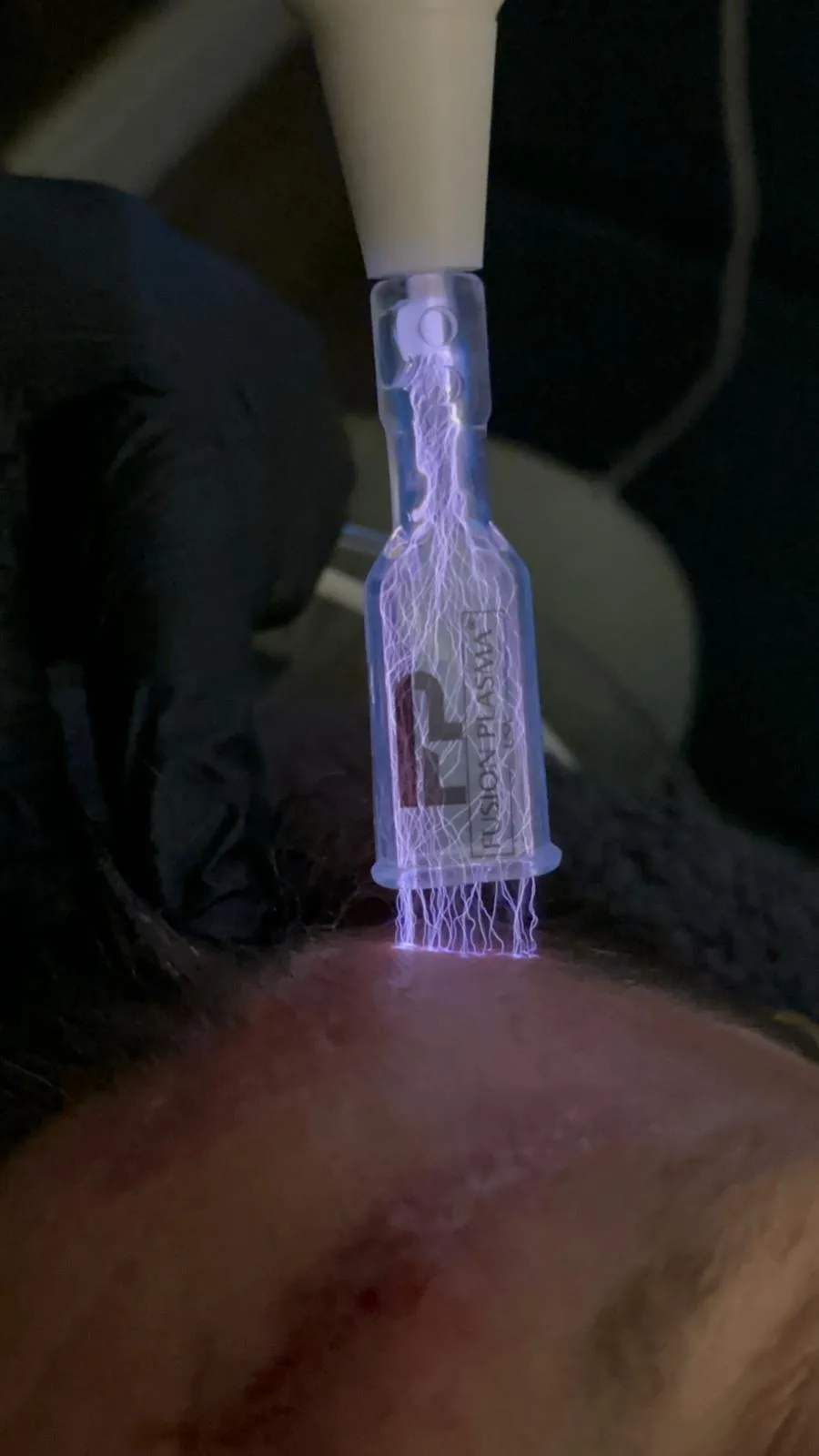
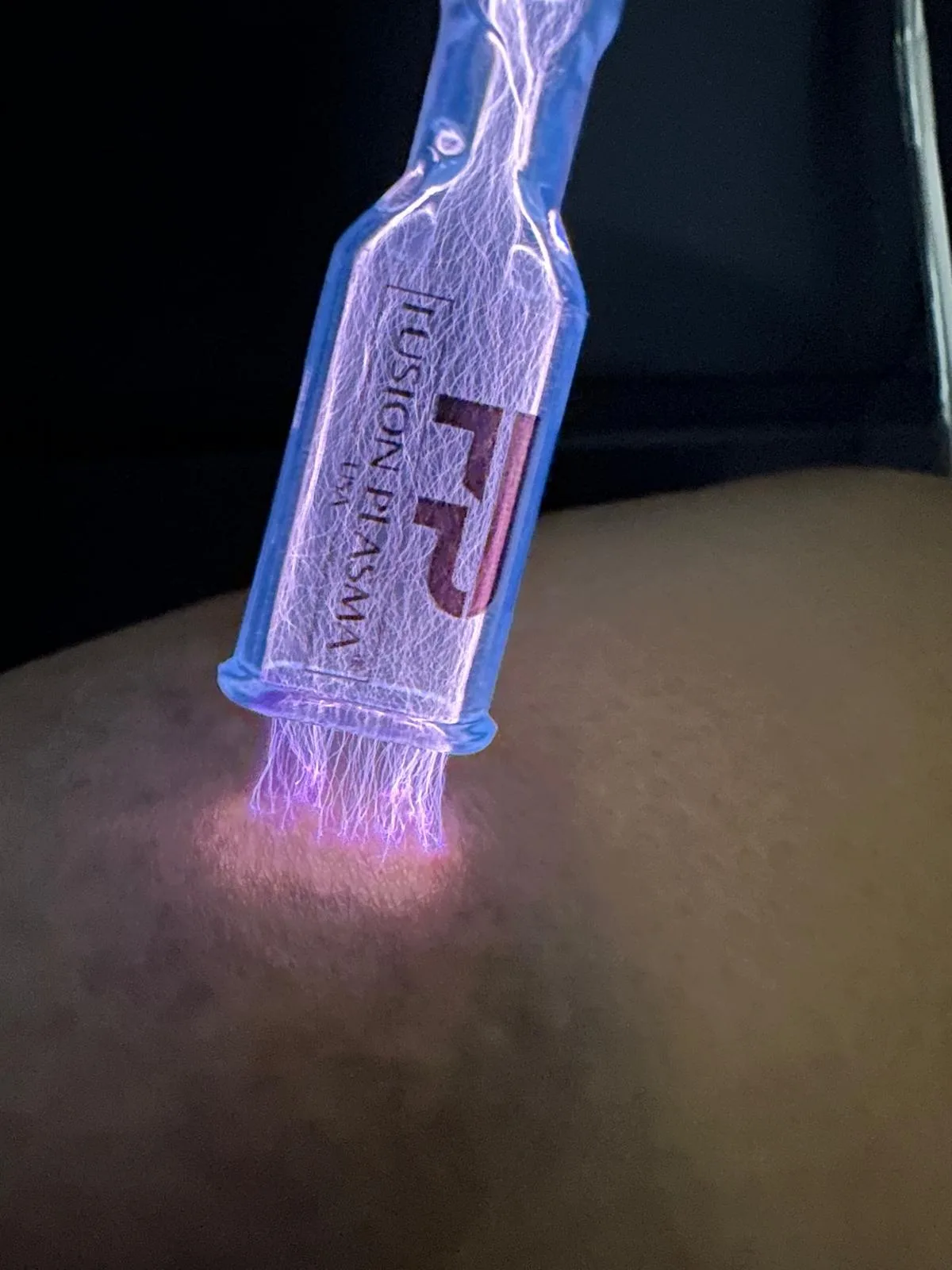
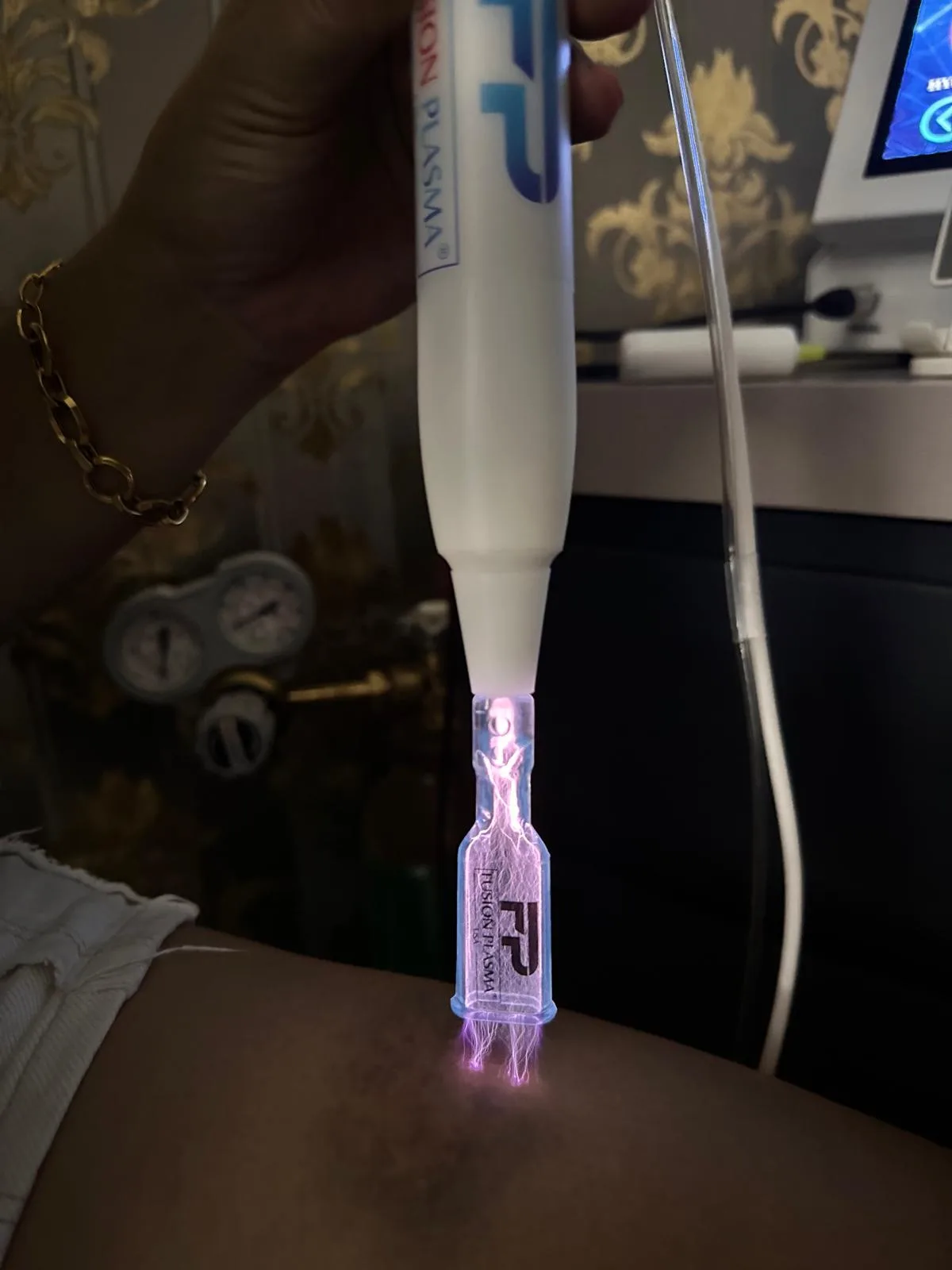
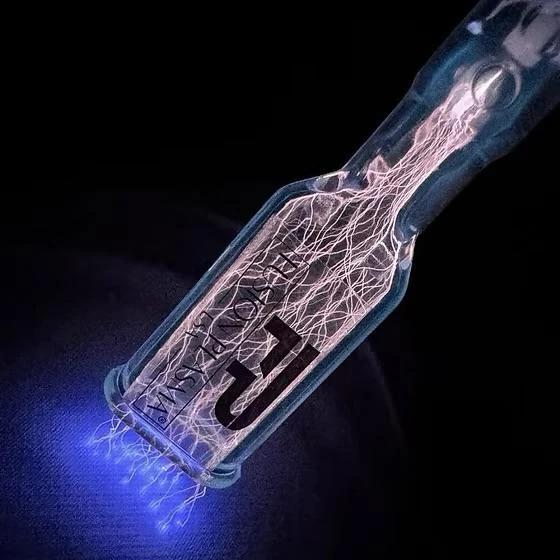
Warm plasma is a gas-free thermal discharge generated by high-voltage, high-frequency electrical energy across a specialized electrode configuration. Because no external gas is required, the system draws ambient air and ionizes it locally at the treatment tip. The result is a blue-white arc that delivers precise, point-source thermal energy. Unlike lasers or RF devices that heat tissue volumetrically, warm plasma delivers energy in discrete micro-pulses, allowing the practitioner to control exactly where and how deep the thermal effect occurs.
Gas-free operation, micro-pulsed delivery, and precise point-source energy make warm plasma uniquely controllable among thermal aesthetic devices.
Energy Delivery & Depth of Action
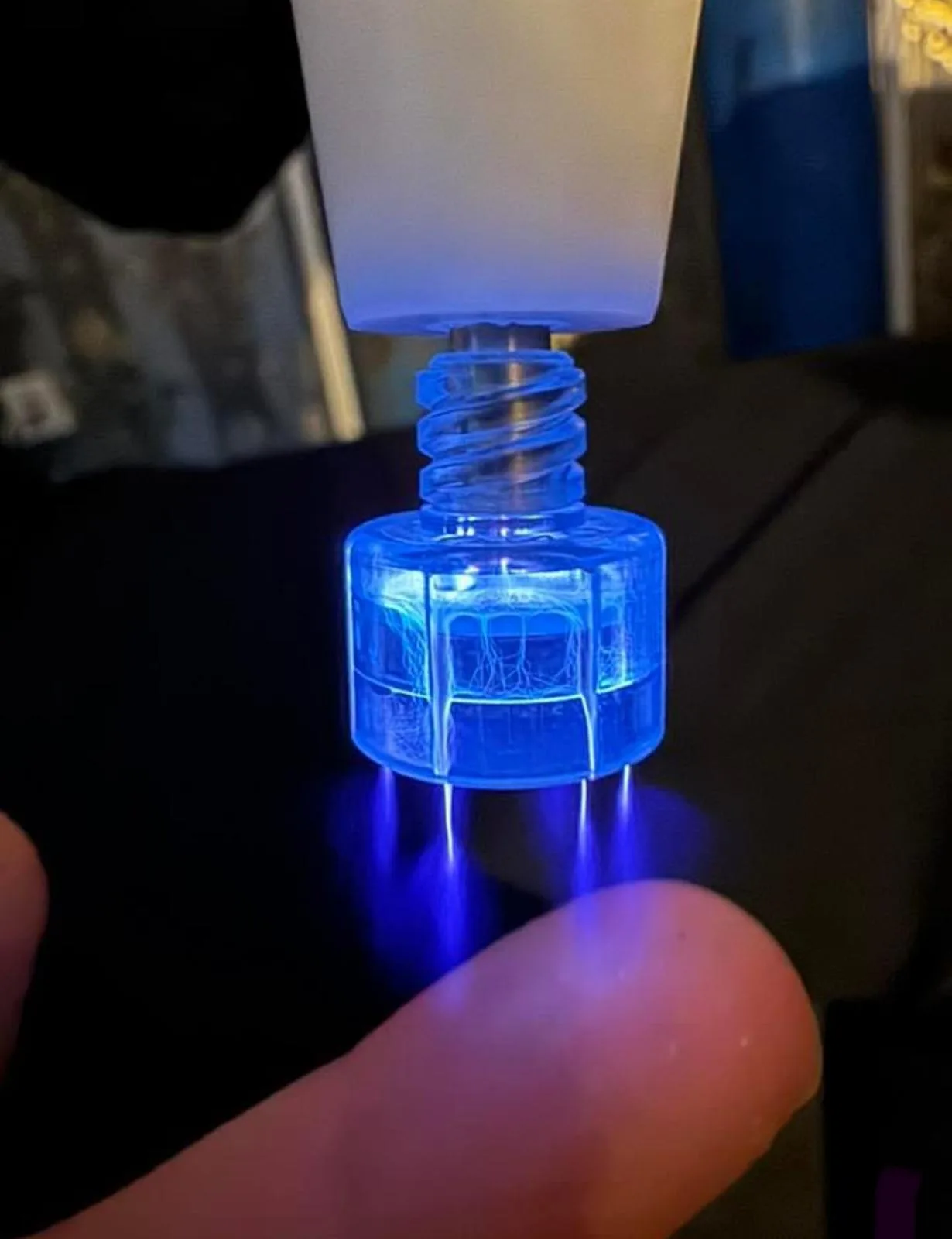
Warm plasma energy penetrates through the epidermis into the papillary and reticular dermis, depending on the tip design and exposure time. The warm plasma needle tip (ılık plazma iğne ucu) reaches 120–400°C and creates controlled micro-coagulation points in the dermis. The derma plasma roller operates at 80–140°C and provides broader, more diffuse thermal coverage. The depth of effect is determined by: tip geometry (needle vs roller), energy setting, contact time, and skin thickness at the treatment site. Practitioners can layer treatments — broad derma plasma first, then targeted needle points — for customized depth control.
Needle tips for deep, point-targeted thermal effect (dermis); roller tips for broad, surface-to-mid thermal coverage.
Wound Healing Cascade & Collagen Remodeling
When warm plasma creates controlled thermal micro-damage in the dermis, the body responds with a full wound-healing cascade: (1) Inflammatory phase — immune cells clear damaged tissue and release growth factors; (2) Proliferative phase — fibroblasts migrate to the area and begin synthesizing new collagen (types I and III) and elastin; (3) Remodeling phase — over weeks to months, the new collagen matures and reorganizes into a structured matrix, replacing scar tissue or filling wrinkles. This is the same biological mechanism that makes fractional lasers effective, but warm plasma offers more precise, point-source control at a lower cost and with less bulk.
Controlled thermal micro-damage triggers the body's natural wound-healing cascade — fibroblast activation, collagen synthesis, and tissue remodeling.
Warm Plasma vs Laser / RF
Warm plasma offers distinct advantages over traditional thermal devices: (1) Precision — plasma is delivered at a single point, not a beam or volume, allowing sub-millimeter accuracy; (2) No chromophore dependence — unlike lasers, plasma does not rely on melanin or water absorption, making it safer for all skin types; (3) Gas-free operation — no consumable gas cylinders, simpler logistics; (4) Lower capital cost than comparable laser platforms; (5) Dual-mode capability — the same device switches to cold plasma for non-ablative protocols. The trade-off is that warm plasma creates visible surface effects (crusting, erythema) that require 3–7 days of recovery, similar to aggressive fractional treatments.
Point-source precision, no chromophore dependence, gas-free operation, and dual-mode versatility — warm plasma redefines thermal aesthetics.
Clinical Applications of Warm Plasma
Warm plasma is the aggressive-modality choice for conditions that require structural dermal remodeling. Its primary applications include: deep wrinkle and fine line reduction (especially periorbital and perioral), non-surgical eyelid tightening (non-ablative blepharoplasty), acne scar and surgical scar revision, stretch mark (striae) treatment, hyperpigmentation and spot removal through controlled epidermal renewal, and skin laxity and sagging on face, neck, and décolletage. Each indication uses a specific tip, energy level, and contact protocol that has been clinically validated by Fusion Plasma's R&D team.
- Deep Wrinkles — Warm plasma needle tip for periorbital and perioral lines
- Scar Revision — Derma plasma + needle tip for atrophic and hypertrophic scars
- Stretch Marks — Roller + needle combination for striae rubrae and albae
- Skin Laxity — Broad derma plasma for neck, jowls, and décolleté tightening
- Pigment Spots — Controlled epidermal renewal for solar lentigines and melasma
- Non-Surgical Blepharoplasty — Needle tip for upper eyelid skin tightening
Chapter Summary
Warm Plasma is Fusion Plasma's answer to aggressive skin renewal. By delivering controlled thermal energy directly into the dermis through gas-free, point-source micro-discharges, it triggers the body's own collagen remodeling machinery. The result is genuine structural improvement — not just surface smoothing — for wrinkles, scars, laxity, and pigment. Understanding warm plasma's energy-depth relationship and wound-healing timeline is essential for setting realistic patient expectations and achieving predictable outcomes.